Leave Your Message
0%

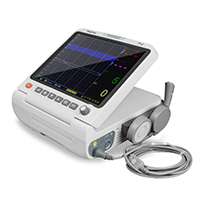
Picking out a fetal heart monitor isn't just about specs like screen size or how much it costs—it's more about what actually works well in your clinic. Think about how many patients you see, how many rooms you have, and your usual routines. Some clinicians might focus on how clear the sound is, how comfy the probe feels, whether the display is easy to read, battery life, and how simple it is to clean. Those small things really add up—like a dim screen or a tangled cable can hold up even the most hectic appointments.

A good monitor helps trained staff pick up and record fetal heart sounds accurately, but it’s not a magic solution. It doesn’t replace good clinical judgment, a full exam, or follow-up if something seems off. The way you position the probe, how far along the pregnancy is, patient movements, and background noise can all mess with what you hear. So, clear instructions and proper staff training matter just as much as the device itself. And don’t forget to check the manufacturer’s guidelines for how to operate and maintain the monitor, and what its limitations are.

Looking online for the “Best Fetal Heart Rate Monitor” can seem pretty straightforward. But honestly, the best choice really depends on your clinic’s specific needs and how confident your team is using the equipment. Ask yourself if the readings are easy enough to review quickly, if there are accessories you might need, and how good the support is if something goes wrong. Sometimes, a quick demo can tell you more than a shiny product brochure. And let’s be real—nothing’s perfect. No single feature guarantees perfect results. So, it’s all about balancing usability, evidence, and how well it fits into your daily workflow.

Why Choose a Fetal Heart Monitor for Your Clinic?

What a Fetal Heart Monitor Measures

Why Choose a Fetal Heart Monitor for Your Clinic?

What a Fetal Heart Monitor Measures

A fetal heart monitor records the baby’s heart rate during pregnancy and labor. Most external devices use Doppler ultrasound to detect cardiac movement through the mother’s abdomen. The tracing may show a baseline rate, beat-to-beat variability, accelerations, and decelerations. These patterns help clinicians assess how the fetus responds to movement, contractions, and temporary stress.

The monitor may also track uterine activity. A pressure-sensitive sensor records contraction timing and duration from the abdominal surface. It does not directly measure pressure inside the uterus. That distinction matters. Some systems display the mother’s pulse, helping staff separate maternal and fetal signals when both rates appear similar.

Numbers need context. Gestational age, medications, movement, fever, and labor progression can influence the tracing. A single reading should not replace clinical assessment. A quiet pattern may reflect sleep, poor signal contact, or a genuine concern. The tracing is not the baby itself. It is evidence that requires careful interpretation.

In a clinic, clear alarms and stable signal quality can support faster review. Staff should confirm sensor placement and check the mother’s pulse when the pattern seems unusual. As the Fetal And Neonatal Heart Monitor Market grows, procurement teams should examine measurement limits, staff training, maintenance needs, and local clinical requirements. Even experienced teams can overread a reassuring line.

How Fetal Heart Monitoring Supports Clinical Assessment

A Fetal Heart Rate Monitor can add a clear, repeatable observation to a clinic visit. During a visit, clinicians assess fetal heart activity alongside gestational age, maternal history, symptoms, and movement. The sound is reassuring to many families, but a number on a screen is only one piece of the picture. Context matters.

Good assessment depends on technique. The clinician checks probe position, allows time for a stable signal, and notes the rate and relevant changes. A brief reading can be affected by fetal movement, maternal pulse, or poor contact. Sometimes the signal drops. That is not a conclusion; it is a reason to reposition, recheck, or use another assessment method when appropriate. Not every visit is identical.

Consistent documentation helps teams compare findings over time and communicate concerns clearly. Staff need training to recognize signal limits and follow local protocols, rather than treating the device as diagnostic authority. A Fetal Heart Rate Monitor supports clinical judgment; it does not replace it. There is room for uncertainty. Explaining that uncertainty in plain language can help families understand what the reading can—and cannot—show.

Why Choose a Fetal Heart Monitor for Your Clinic?

How Fetal Heart Monitoring Supports Clinical Assessment

This representative 10-minute fetal heart rate tracing demonstrates a baseline within the commonly used 110–160 bpm range, moderate beat-to-beat variability, and brief accelerations. These features can help clinicians assess fetal well-being alongside gestational age, uterine activity, maternal condition, and other clinical findings. The tracing is illustrative and is not a patient record or a substitute for professional interpretation.

Benefits for Clinic Workflow and Patient Care

A fetal heart monitor can make routine assessment more consistent when the clinic has a clear workflow. Staff can prepare the device, confirm gestational age, apply gel, and record the heart rate, time, and relevant symptoms. A quiet room helps, but locating the heartbeat may still take patience. That is normal.

The World Health Organization’s 2016 intrapartum-care recommendations support intermittent fetal heart-rate auscultation with a Doppler or Pinard stethoscope for healthy women in labor. The guidance also makes clear that monitoring should fit the clinical context, not replace skilled assessment.

Reliable documentation supports handovers between clinicians and helps identify when a finding needs follow-up. The CDC’s National Center for Health Statistics reported that 10.4% of U.S. births were preterm in 2022. This population figure does not show that a monitor prevents preterm birth; it underscores why clear assessment and referral pathways matter.

A fetal heart reading is one observation, not a diagnosis. Staff should interpret it alongside the patient’s symptoms and care plan, and escalate concerns under clinic protocols. Devices need routine checks, too. In practice, a rushed reading can create more uncertainty than reassurance.

Key Features to Compare When Choosing a Monitor

Why Choose a Fetal Heart Monitor for Your Clinic?
Key Features to Compare When Choosing a Monitor

When comparing monitors, check signal stability, display clarity, and how easily staff can distinguish fetal from maternal pulse. A readable trace matters in a dim room, especially when contractions cause movement. FIGO’s 2015 cardiotocography guidance describes a normal baseline fetal heart rate of 110–160 beats per minute and variability of 5–25 beats per minute. Look for a device that presents these details clearly, while leaving interpretation to trained clinicians. A crisp screen can still mislead when transducer placement is poor.

A Fetal Heart Rate Monitor Hospital shortlist should also consider alarm settings, battery life, cleaning requirements, and digital record export. WHO’s 2023 Born Too Soon report estimated 13.4 million preterm births worldwide in 2020. That figure underscores the need for dependable maternity workflows, not any single device. Ask whether the monitor performs consistently during routine checks and whether staff can learn its controls quickly. No feature replaces careful assessment.

Tips: Test the probe on a moving patient simulator, review sample traces, and check how easily the unit can be cleaned. Keep the user manual nearby.

Why Choose a Fetal Heart Monitor for Your Clinic? - Key Features to Compare When Choosing a Monitor

Feature Why It Matters in a Clinic Common Specifications or Options Key Points to Compare
Intended Clinical Use Determines whether the monitor is suitable for routine prenatal checks, labor monitoring, triage, or higher-risk pregnancies. Handheld Doppler for intermittent assessment; compact monitor for routine antepartum checks; cardiotocograph for continuous fetal and uterine monitoring. Match the device to patient volume, clinical workflow, gestational age, and whether continuous monitoring is required.
Fetal Heart Rate Range A broad measurement range helps the clinician identify normal, low, or elevated readings without unnecessary interruptions. Many clinical Fetal Monitors provide a displayed range of approximately 50–240 beats per minute, depending on the model and operating mode. Confirm the specified range, measurement accuracy, signal quality indicators, and performance requirements in the product documentation.
Measurement Accuracy Reliable measurements support timely clinical decisions and reduce the risk of acting on inaccurate readings. Common published specifications are around ±2 beats per minute or ±2%, although accuracy varies by device, signal quality, and fetal movement. Look for clearly stated accuracy limits, validation information, and instructions for confirming the fetal signal rather than the maternal pulse.
Ultrasound Probe Frequency Probe frequency affects penetration, signal acquisition, and suitability for different examination conditions. Common fetal Doppler probes use approximately 2 MHz or 3 MHz ultrasound frequencies. Lower frequencies generally offer greater penetration, while higher frequencies may provide stronger near-field resolution. Check whether the probe is appropriate for the intended gestational age, body habitus, and clinical examination environment.
Intermittent or Continuous Monitoring Intermittent monitoring is efficient for routine visits, while continuous monitoring is useful during labor or when closer observation is indicated. Handheld devices typically provide intermittent readings; cardiotocography systems can continuously record fetal heart rate and uterine activity. Confirm recording duration, paper or digital trend storage, alarm behavior, and suitability for the clinic's monitoring protocols.
Uterine Activity Measurement Monitoring contractions alongside fetal heart rate supports assessment during labor and selected antenatal tests. External tocodynamometry is commonly used to track contraction timing and relative changes in uterine activity. Choose a system with a compatible uterine activity sensor when labor monitoring or non-stress testing is part of the service.
Display and Readability A clear display helps staff read values quickly in examination rooms, labor areas, and low-light settings. Options include numeric fetal heart rate display, signal strength indicators, waveform or trend screens, adjustable brightness, and visual status alerts. Assess viewing angle, screen size, contrast, language settings, and whether key values remain visible during prolonged monitoring.
Audio Output Audible Doppler output can help clinicians locate and verify the fetal signal during intermittent assessment. Typical features include an integrated speaker, adjustable volume, and an audio output that reflects the detected Doppler signal. Check volume control, clarity in a busy clinical environment, and whether audio can be muted without stopping measurement.
Signal Quality and Artifact Detection Movement, maternal pulse, and weak contact can produce misleading values. Signal-quality tools help staff recognize unreliable readings. Useful functions may include signal strength bars, loss-of-signal alerts, maternal heart rate comparison, and visual quality indicators. Prioritize monitors that make signal loss obvious and support routine confirmation of fetal versus maternal heart rate.
Data Storage and Connectivity Stored records can support documentation, review, quality assurance, and integration with clinical workflows. Basic devices may have no storage; advanced systems may provide internal memory, USB export, wired networking, or electronic record connectivity. Verify file formats, patient identification, access controls, audit trails, and compatibility with the clinic's information systems.
Battery and Power Options Reliable power is important for mobile examinations, emergency use, and uninterrupted monitoring. Options include mains power, rechargeable lithium-ion batteries, replaceable batteries, battery status indicators, and automatic power-saving modes. Compare operating time, charging duration, battery replacement policy, and whether the device can operate while charging.
Probe and Accessory Design Comfortable, durable accessories improve usability and reduce replacement costs in high-use departments. Common accessories include fetal ultrasound probes, uterine activity sensors, belts, ultrasound gel, probe holders, and protective covers. Check connector durability, cable length, ergonomic weight, accessory availability, and the cost of replacement parts.
Cleaning and Infection Control The monitor and probes may be used with multiple patients and must be cleaned safely between examinations. Features may include smooth surfaces, sealed controls, detachable probes, and compatibility with specified hospital-grade cleaning agents. Follow the manufacturer's approved cleaning method and verify the device's ingress protection and reprocessing instructions.
Alarm and Alert Functions Alerts can draw attention to prolonged signal loss, readings outside configured limits, or technical problems. Possible functions include adjustable high and low heart-rate limits, technical alarms, signal-loss alerts, and visual or audible notifications. Confirm that limits are configurable, alarm volume is appropriate, and alarms can be managed according to local clinical policy.
Regulatory and Safety Documentation Documentation helps the clinic confirm that the device is legally marketable and appropriate for its intended medical use. Relevant documentation may include applicable medical-device registration, electrical safety testing, ultrasound output information, user instructions, and risk-management records. Verify local regulatory status, electrical safety requirements, ultrasound safety information, warranty terms, and service support.
Ease of Use and Staff Training Simple controls reduce setup time and help standardize examinations among clinicians and nursing staff. Important elements include intuitive controls, guided setup, quick-start operation, on-screen instructions, and clear user manuals. Evaluate the number of steps required for routine use, staff training time, and the availability of technical support.
Maintenance and Total Cost of Ownership The purchase price does not include batteries, probes, belts, paper, software, calibration, repairs, or staff training. Cost factors include preventive maintenance, battery replacement, accessories, software updates, service contracts, and expected operating life. Compare the full lifecycle cost, service response time, spare-part availability, warranty coverage, and calibration requirements.

How to Integrate Monitoring into Routine Practice

Integrating a fetal heart monitor into routine practice starts with a defined clinical question, not a new device. Is the pregnancy low risk, high risk, or changing quickly?

The World Health Organization estimated 1.9 million stillbirths worldwide in 2021. This burden supports timely surveillance, but it does not justify identical monitoring for every patient. Use clinical history, gestational age, fetal movement, and maternal symptoms to shape each monitoring plan.

A practical workflow can fit into a normal visit. Confirm consent and maternal identity, position sensors correctly, and record a readable baseline trace. Assess baseline rate, variability, accelerations, decelerations, and contractions using local guidance.

NICE guideline NG229 emphasizes structured CTG assessment and urgent review when abnormalities persist. A second clinician should review uncertain traces. Small details matter. Document who interpreted the trace, when escalation occurred, and what action followed. Poor sensor contact can create alarming artifacts, so staff should repeat the trace before making assumptions.

Training should include supervised cases, emergency drills, equipment checks, and periodic competency reviews.

A Cochrane review found that continuous cardiotocography reduced neonatal seizures but increased operative births, without clear evidence of reduced cerebral palsy. That finding invites restraint. Monitoring should support, not replace, bedside assessment and clinical judgment.

Clinics can audit signal quality, response times, intervention rates, and missed documentation each quarter. The audit may expose uncomfortable gaps. Those gaps are useful when the team changes its process.

Training, Safety, and Limitations of Fetal Monitoring

Choosing a Hospital Fetal Heart Rate Monitor requires more than checking screen size or alarm volume. Staff must understand baseline rate, variability, accelerations, and decelerations. Training matters. ACOG’s 2021 guidance emphasizes standardized interpretation and prompt clinical review, not automatic intervention.

A monitor records fetal heart patterns, but it does not diagnose distress alone. The 2017 Cochrane review examined 13 trials involving more than 37,000 women. Continuous cardiotocography reduced neonatal seizures, yet it did not clearly reduce cerebral palsy or perinatal death. It also increased operative births. Signals are not diagnoses. A quiet tracing may reflect poor contact, maternal movement, or sensor displacement. In a busy room, an unnoticed artifact can resemble a serious change. That limitation deserves honest attention.

Tips: Train with realistic strips, including noisy examples. Confirm unusual readings with maternal pulse checks and clinical assessment. Follow local protocols, document decisions, and review difficult cases regularly. WHO guidance supports intermittent auscultation for many low-risk labors, while continuous monitoring may suit selected risks. I would not treat continuous data as a substitute for bedside judgment. Machines help. They can also encourage overconfidence.

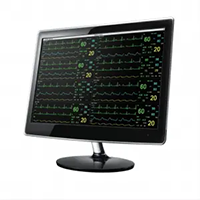
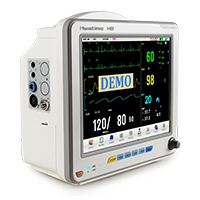
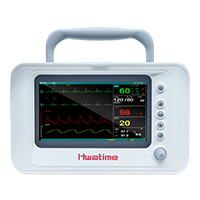
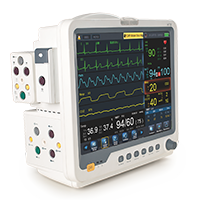
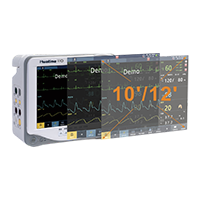
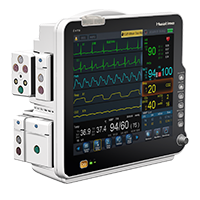
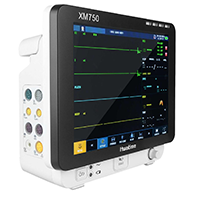
Choosing a High-Quality ECG, SpO₂ & NIBP Patient Monitor: Meet the Hwatime iHT8 Modular Monitor

Choosing a high-quality patient monitor requires more than comparing screen size or price. ECG, SpO₂, and non-invasive blood pressure (NIBP) measurements should work together to provide clinicians with a reliable view of cardiac rhythm, oxygenation, and hemodynamic status. The World Health Organization reports that cardiovascular diseases caused approximately 17.9 million deaths globally in 2019, highlighting the importance of dependable ECG surveillance in hospitals and emergency settings. A suitable monitor should support accurate multi-lead ECG analysis, clear waveform display, adjustable alarm limits, and effective protection against electrical interference.

SpO₂ performance is equally important, particularly for patients with respiratory compromise or poor peripheral circulation. Professional guidance from the U.S. Food and Drug Administration notes that factors such as motion, low perfusion, skin pigmentation, and incorrect sensor placement can influence pulse-oximetry readings. Therefore, buyers should evaluate sensor compatibility, signal quality indicators, response time, and the monitor’s ability to identify unreliable measurements rather than relying only on displayed values.

For NIBP, measurement consistency, cuff-size selection, inflation comfort, and repeatability are essential. A modular architecture allows hospitals to configure the monitor according to department needs and upgrade functions without replacing the complete platform. Features such as trend review, data export, centralized monitoring connectivity, battery backup, and intuitive operation can improve workflow across wards, intensive care units, and transport scenarios. Compliance with relevant medical-device and electrical-safety standards should also be verified before procurement.

FAQS

What does a fetal heart monitor add to a clinical visit?

It provides a repeatable observation of fetal heart activity. The number is only one part of assessment. Context matters.

What can affect the accuracy of a reading?

Fetal movement, maternal pulse, poor contact, and probe position can disturb the signal. A dropped signal is not a diagnosis. Reposition and recheck.

What should clinicians assess alongside the heart rate?

They should consider gestational age, fetal movement, maternal symptoms, medical history, contractions, and relevant heart-rate changes. No single reading tells everything.

What heart-rate ranges may appear during assessment?

Some clinical guidance describes a baseline of 110–160 beats per minute. Variability may be assessed around 5–25 beats per minute. Trained staff must interpret these findings.

How can clinics choose a suitable monitor?

Compare signal stability, display clarity, alarm settings, battery life, cleaning needs, and record-export options. Test it during movement. A crisp screen can still mislead.

How should monitoring fit into routine practice?

Start with a clinical question. Confirm consent and identity, place sensors carefully, and record a readable baseline trace. Different patients may need different plans.

What should staff do when a trace seems uncertain?

Repeat the trace and check sensor contact. A second clinician should review unclear findings. Escalate persistent abnormalities according to local procedures.

Why are training and documentation important?

Training helps staff distinguish fetal and maternal pulses. Documentation should record the interpreter, timing, concerns, and actions taken. Small omissions can matter later.

Can continuous monitoring replace bedside assessment?

No. It supports clinical judgment but does not replace examination, symptoms, movement history, or professional review. The process is not perfect.

Conclusion

A Fetal Heart Monitor is a valuable clinical tool for observing fetal heart rate patterns and supporting assessment of fetal well-being during pregnancy and labor. By providing timely information about heart rate, rhythm, and changes in response to contractions or movement, it can help healthcare professionals identify patterns that may require closer observation or further evaluation. Monitoring does not replace clinical judgment, physical assessment, or other diagnostic methods, but it can contribute to a more complete understanding of the patient’s condition.

When choosing a monitor, clinics should compare signal quality, ease of use, display clarity, recording options, patient comfort, portability, cleaning requirements, and compatibility with existing workflows. Integrating monitoring into routine practice requires clear protocols, appropriate staff training, regular equipment checks, and careful attention to safety and privacy. Understanding the device’s limitations is equally important, since readings can be affected by positioning, motion, or signal interference. With responsible use, a Fetal Heart Monitor can support efficient documentation, consistent observation, and informed communication between clinical teams and expectant parents.

Clara

Clara

Clara is a dedicated marketing professional at Shenzhen Huateng Biomedical Electronics Co., Ltd., where her extensive expertise in biomedical electronic products sets her apart in the industry. With a deep understanding of the latest technological advancements, Clara plays a pivotal role in......
Previous How to Choose a Patient Monitor for Your Hospital?